Mutual Fund Vs Trading
Should I Invest In Stocks Or Mutual Funds Quora

Apr 29, 2018 · the main difference between mutual funds and share trading is the tenure you retain your assets to make a profit. most mutual funds require a lock-in of a few years to make good returns. stocks, on. Index mutual funds. like etfs, index mutual funds are considered passive investments because they mirror an index. they mutual fund vs trading can also be a low-cost way to invest—many have annual expenses of less than 0. 10%. 3. a few scenarios where an index fund may be a better option than an etf: you can buy an index mutual fund that has lower annual operating. For more information, see closed-end funds vs. mutual funds and etfs 2. an etf that is trading at a premium has a market price higher than its nav; therefore, an investor would pay more for the etf than its holdings are actually worth.
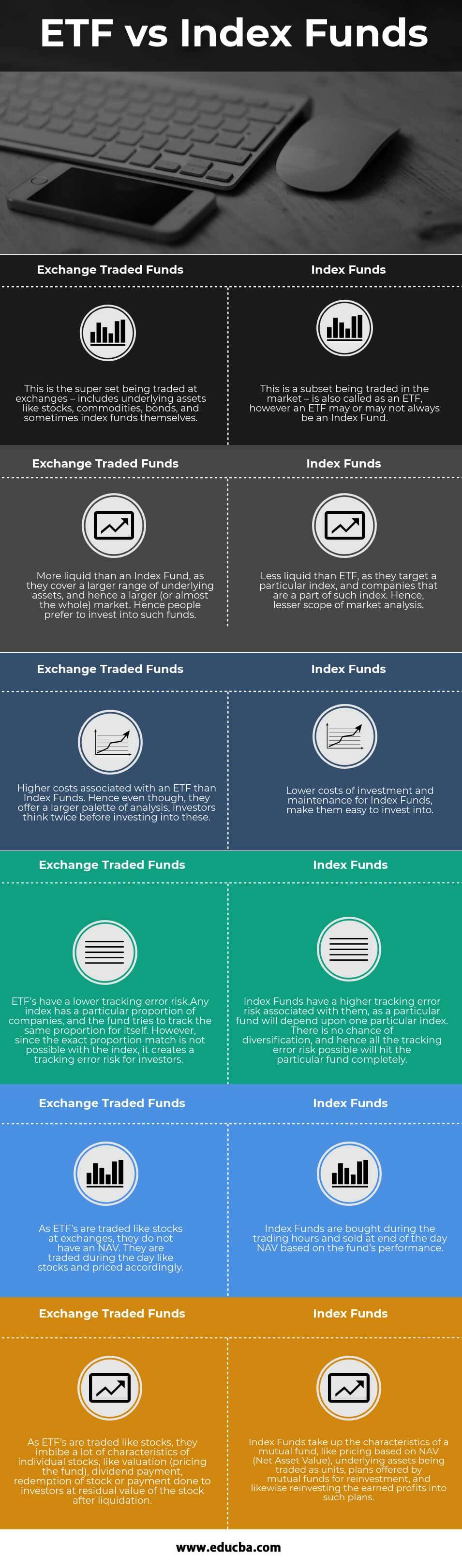
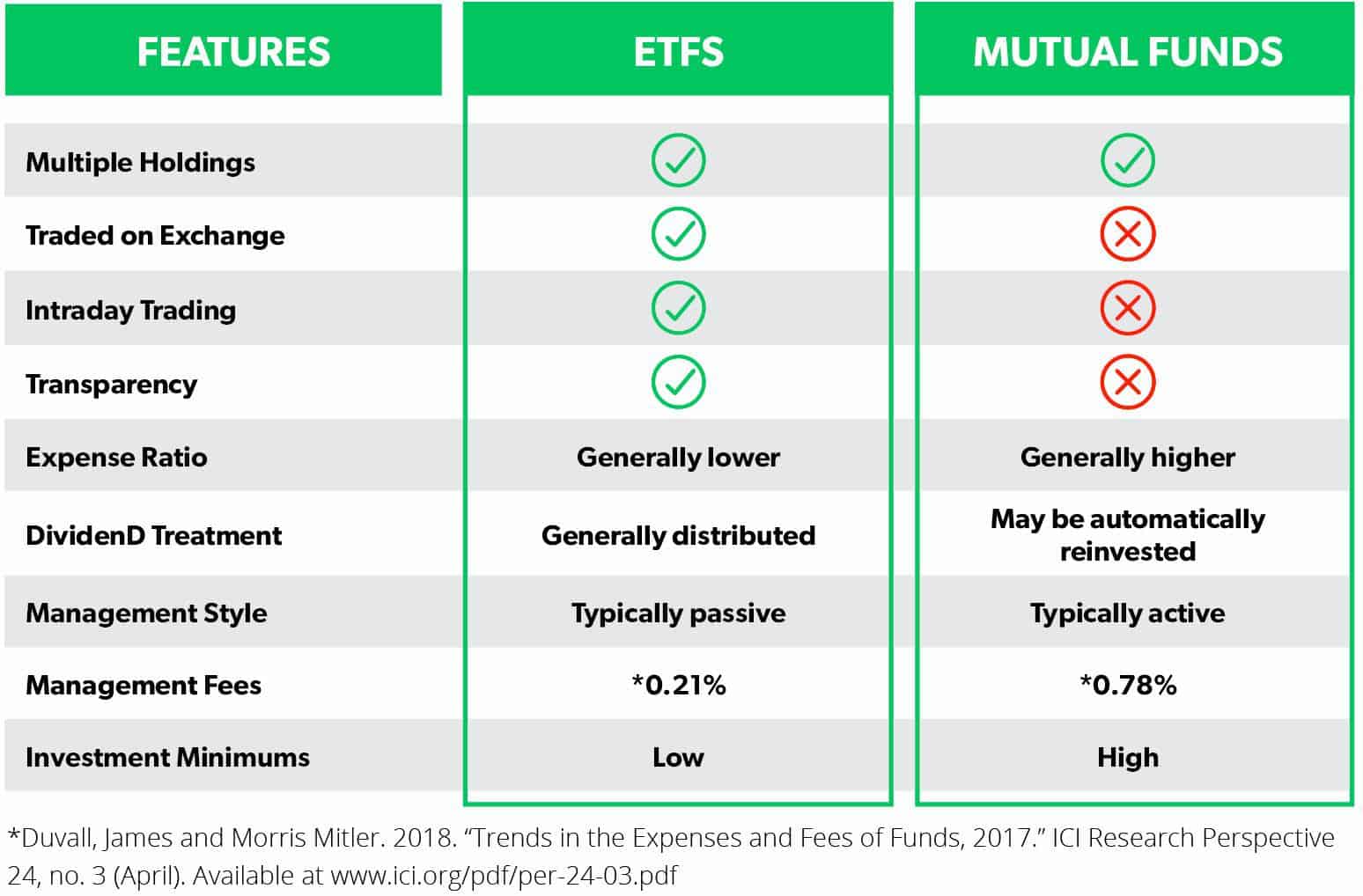
When you buy or redeem a mutual fund, you are transacting directly with the fund, whereas with etfs and stocks, you are trading on the secondary market. unlike stocks and etfs, mutual funds trade only once per day, after the markets close at 4 p. m. et. Mutual fund vs exchange traded fund provides similar investment opportunities to small investors who are constrained by funds and expertise from individually investing in a large diversified portfolio of assets including stock, bonds, commodities, etc. both mutual fund vs exchange traded fund the investment vehicles offer high diversification benefits in the form of better returns at a lower cost. both mutual fund vs exchange traded fund offers a wide variety of investment options and based on your preference you can invest broadly like in a market fund or narrowly like in a sector fund. further, both these investment vehicles are administered by professional portfolio managers who will offer you their expertise and save your time and effort. however, etfs provide several benefits over mutual funds like lower minimum investment, more control over price, lower capital gains tax benefit, trading simplicity, lower commission and management fees involvement, and cleaner transferability See full list on educba. com. This has been a guide to the top difference between mutual fund vs exchange traded fund. here we also discuss the mutual fund vs exchange traded fund key differences with infographics, and comparison table. you may also have a look at the following articles 1. buying vs leasing 2. long term vs short term capital gains 3. different types of mutual fund 4. etf vs index funds: amazing features.

informational purposes only, and is not intended for trading or investing purposes, or for commercial use stock and mutual fund quotes, and related financial news stories may be Mutual funds involve less risk because of the diversified investment portfolio which mitigates the overall market risk. also, the trading costs incurred by individual investors for buying and selling stocks can add up to a huge amount, whereas one can save up on these trading costs through investment in mutual funds where equity and equity-related instruments are traded in bulk thereby. Day trading and investing for the long term are both viable forms of securities trading, and many traders opt to do both. day trading involves making trades that last for seconds or minutes, taking advantage mutual fund vs trading of short-term fluctuations in an asset's price. with day trading, all positions are opened and closed within the same day. Trading for stocks and etfs closes at 4 p. m. et, but unlike with mutual funds, you can continue trading stocks and etfs in the after-hours market. however only the most experienced traders may want to consider after-hours trading, as the difference between the price at which you sell (the bid) and the price at which you buy (the ask), tends.
Should You Invest In Stocks Or Mutual Funds Nerdwallet

The investor may choose to invest in one mutual fund or multiple mutual funds. taxation although the nuances of taxation can vary slightly between brokerage accounts and mutual funds, there are similarities: interest income, ordinary dividends, and short-term capital gains are taxed as ordinary income and investors pay a lower capital gains tax.
“rs. 10,000 invested in infosys in the year 1993 would give you well over rs 2 crore by 2018. ” i read somewhere. “in the year 2000, instead of buying royal enfield, if you had invested that money in its company eicher motor than rs 55,000 invest. townhall mobile iphone/android apps stocks bonds gold mutual funds trading strategies investment newsletters mortages and debt college planning Mutual fund units are bought through the fund management company selling the mutual fund. exchange-traded funds (etfs) are an extension of mutual funds which are traded on the stock exchange just like company shares giving the investor the flexibility to sell short or buy on margin during the trading hours in a day. Both mutual fund vs exchange traded fund are popular choices in the market; let us discuss some of the major differences between mutual fund vs exchange traded fund: 1. unlike mutual funds, etfs are traded on a public stock exchange. hence, like shares of public companies, etf shares can be transferred, bought or sold among investors 2. mutual funds units are directly mutual fund vs trading purchased from the funds at a single nav value fixed during the trading hours of the day. you can buy and sell etf shares anytime during the trading hours and the market decides the price based on demand-supply dynamics at any point in time. hence the price of etf units keeps changing throughout the trading hours thusproviding real-timepricing and greater control of the price of your trade 3. due to their manner of creation and redemption, etfs incur capital gains taxes only when the investor sells the fund. in contrast, mutual funds incur capital gains tax every time they trade the shares. hence tax liabilityis higher
Difference between mutual fund vs exchange traded fund. mutual fund vs trading a mutual fund is a professionally managed investment vehicle created by pooling money from several investors for the purpose of investment in a wide range of securities like stocks, bonds, money market instruments, and other assets. through this vehicle, small or individual investors are able to access the securities or asset markets while. Jan 29, 2021 · mutual funds mutual funds are generally bought directly from investment companies instead of from other investors on an exchange. unlike etfs, they don’t have trading commissions, but they do carry an expense ratio and potentially other sales fees (or “loads”).
Mutual fund timing is the practice of trading mutual funds according to net asset value (nav) closing prices vs. trade prices to gain short-term profits. more mutual fund definition. The main difference between mutual funds and share trading is the tenure you retain your assets to make a profit. most mutual funds require a lock-in of a few mutual fund vs trading years to make good returns. stocks, on.
Trading in mutual funds, however, comes at a much lower cost since these expenses are spread over all portfolios within the fund. based on the information outlined above, both mutual funds and equity stocks come with their pros and cons. therefore, it is highly recommended that individuals looking to invest in either one take the time to. Stock mutual funds (also known as equity mutual funds) are like a middleman between you and stocks: they pool investor money and invest it in a number of different companies.
The concept of stock trading came-up somewhere in the 1500s, but the first publically trading in a company started in 1602 when the dutch east india company released its stocks on the amsterdam stock exchange. on the other hand, the birth of the mutual fund is associated with the financial crisis that happened in europe in the early 1770s. Trading shares in mutual funds are different from trading shares in stocks or exchange-traded funds (etfs). the fees charged for mutual funds can be complicated. understanding these fees is. May 13, 2019 · trading shares in mutual funds are different from trading shares in stocks or exchange-traded funds (etfs). the fees charged for mutual funds can be complicated. understanding these fees is. card mortgage information payday loans retirement planning mortgage mutual funds trading you are here: home npv npv vs irr no comment 2014-11-13t07:16:38+


Komentar
Posting Komentar